Dodecahedron
The Dodecahedron project begins from a simple intuition: that musical form can be guided not only by sound or notation, but by spatial and geometric relationships that exist outside music itself.
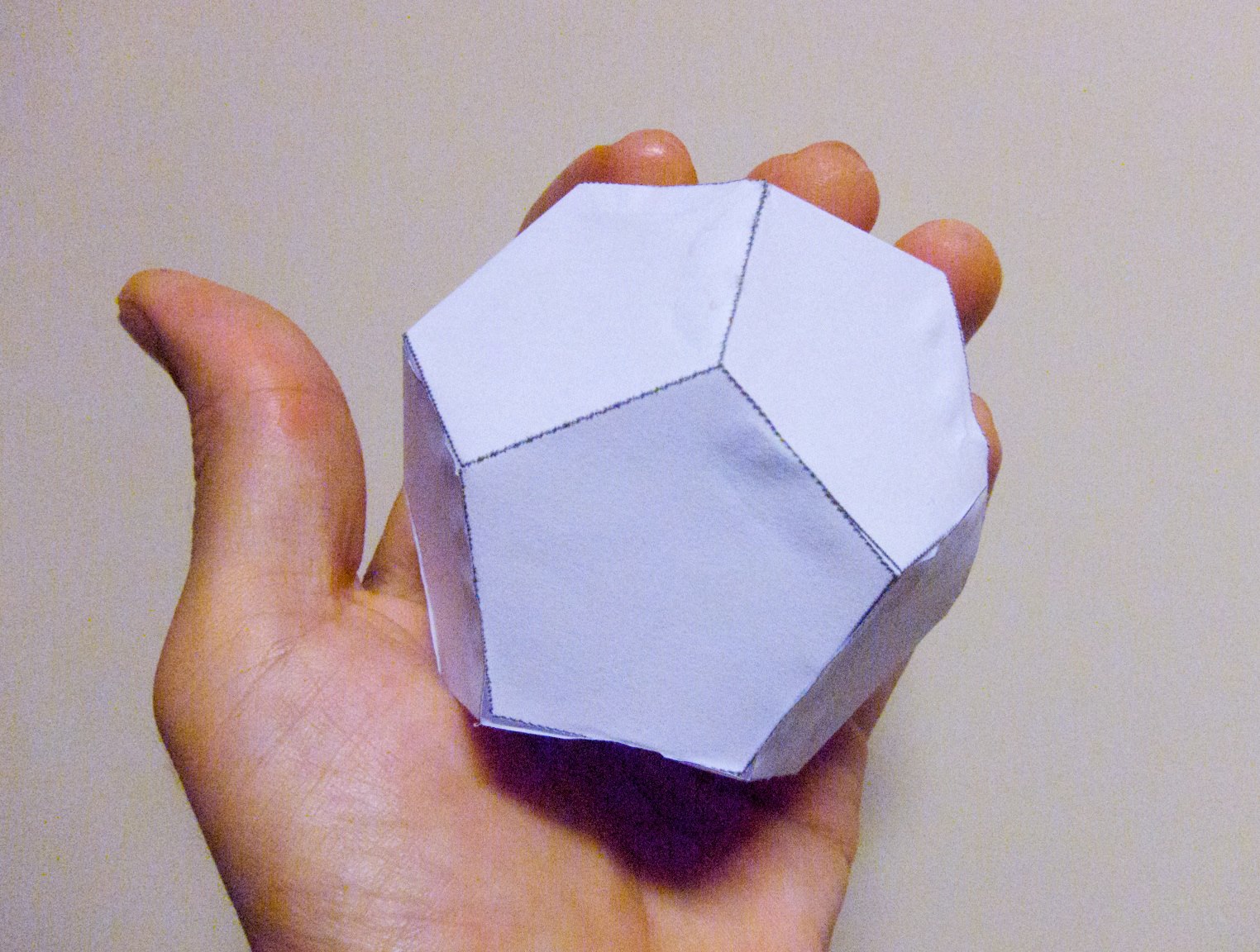
The dodecahedron—a twelve-faced polyhedron—became a compositional and conceptual object through which musical decisions could be distributed, externalized, and shared. Faces, edges, and vertices functioned as prompts rather than prescriptions, suggesting directions of movement, density, transformation, or attention. The geometry did not determine the music; it framed the conditions under which music could emerge.
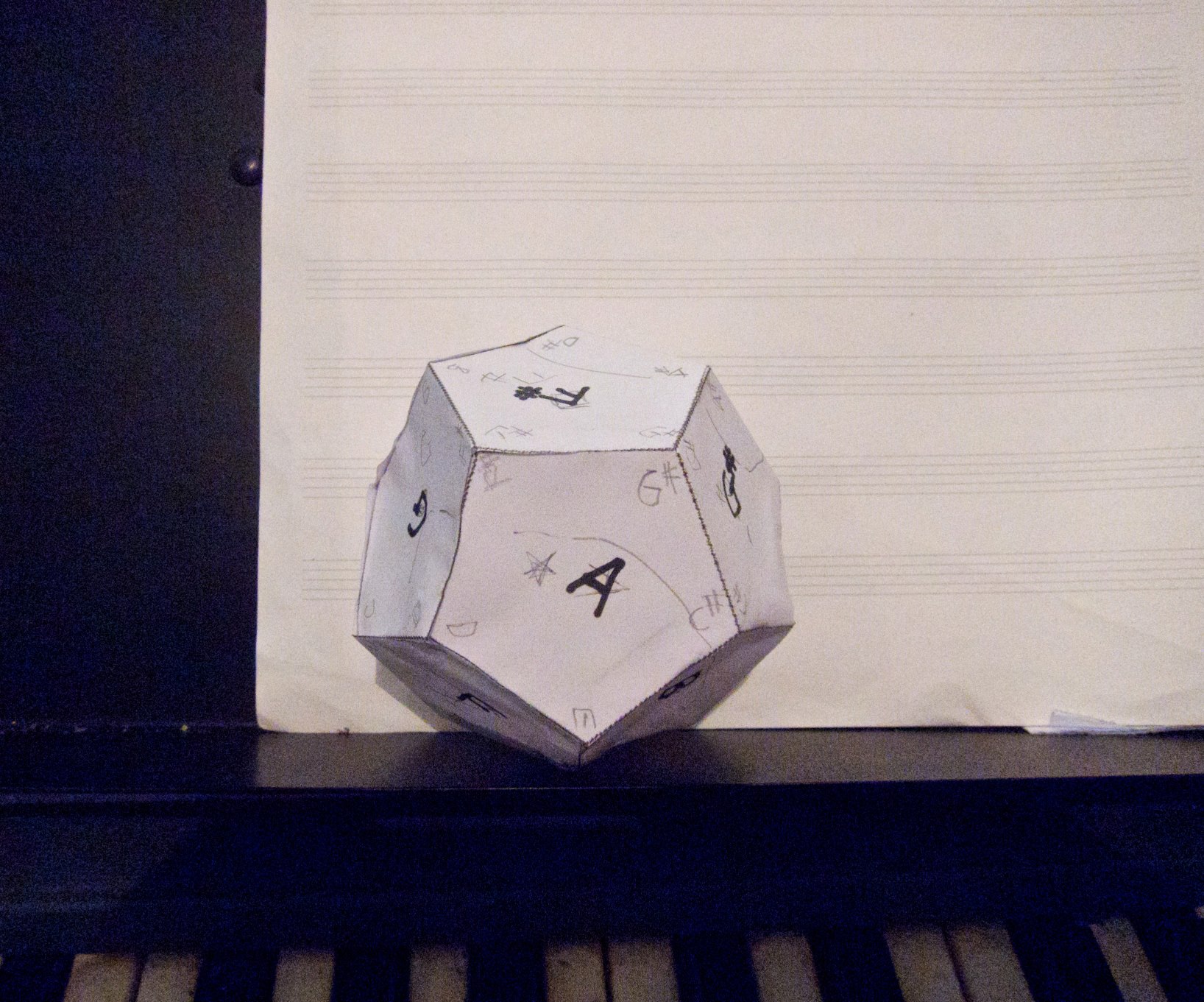
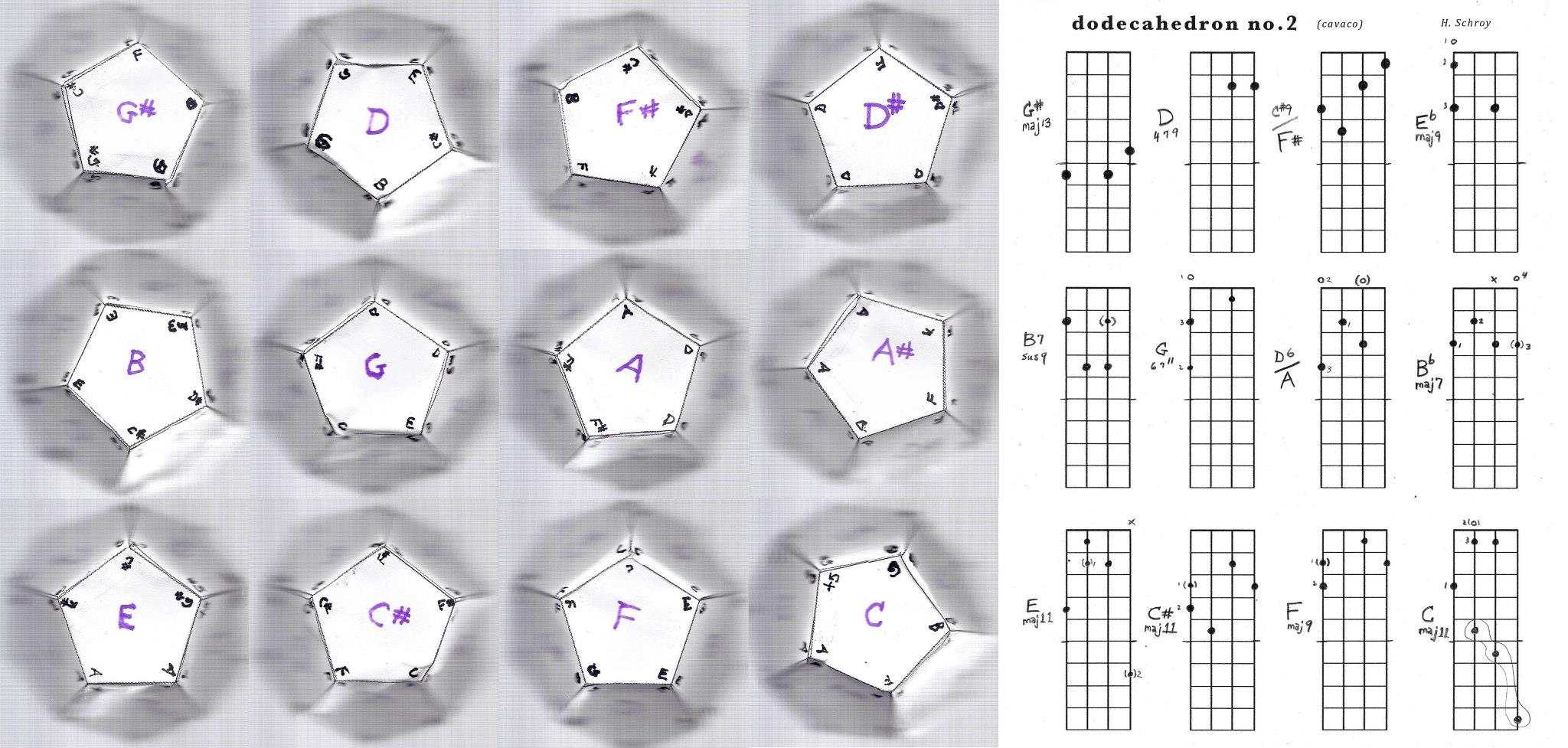
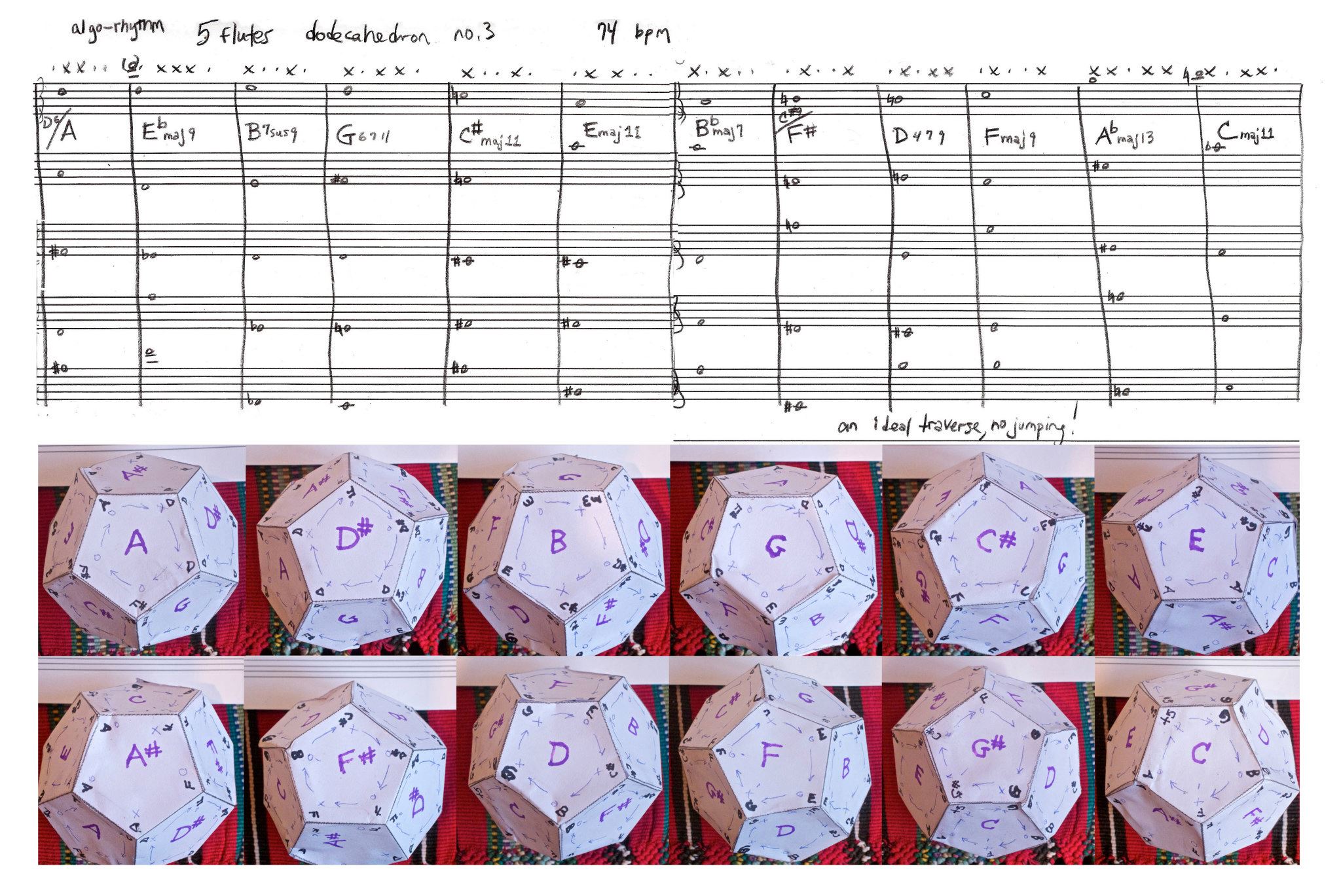
In its earliest iterations, the project took the form of hand-built paper models used as physical scores. Performers navigated the object collaboratively, treating it less as a fixed map and more as a shared space for orientation and listening. The emphasis was on process, negotiation, and collective awareness rather than on reproducible results.
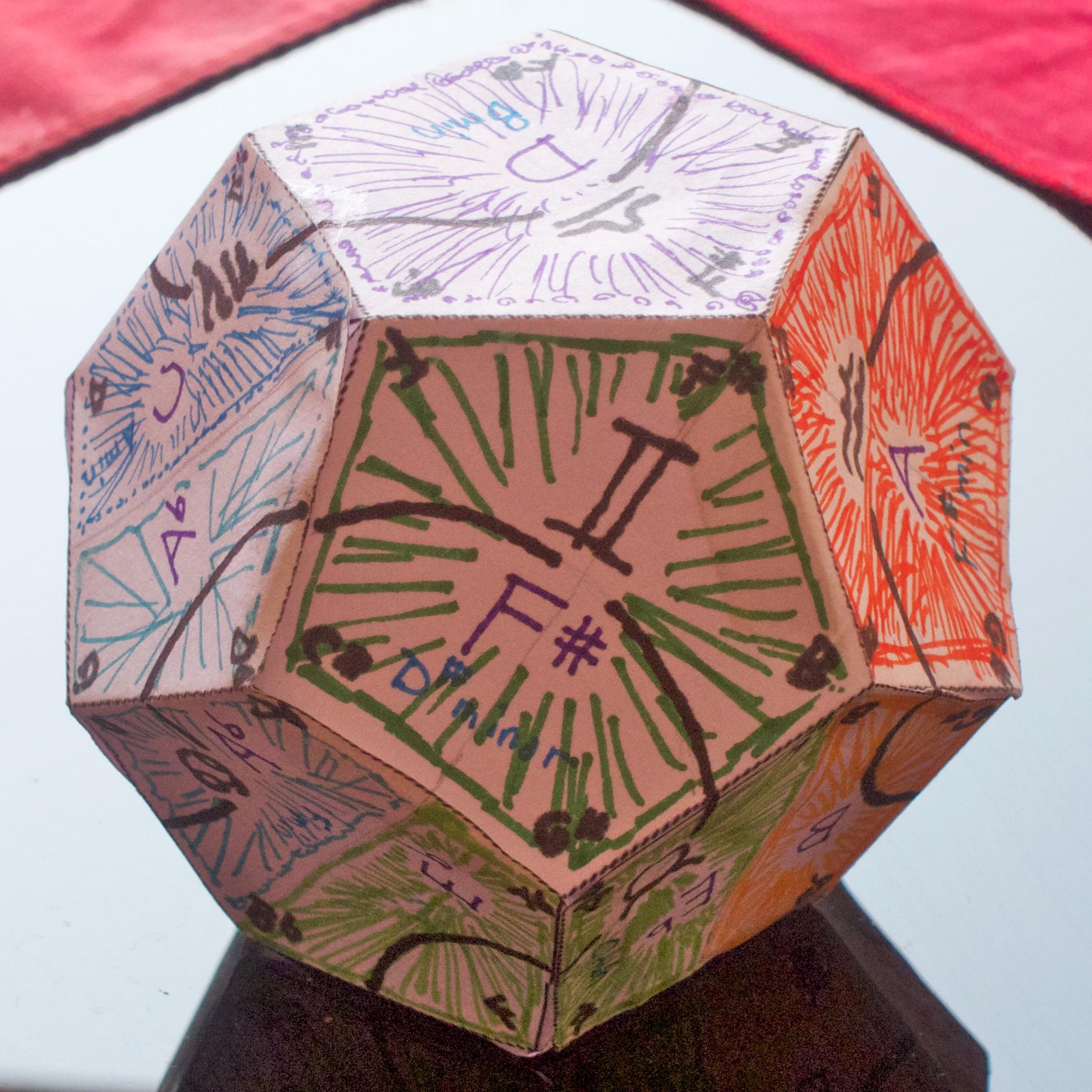
Looking forward, Dodecahedron remains an unfinished proposition. I imagine it evolving into a digitally mediated, collective improvisational ritual—one that combines sound, image, and spatial instruction. In this envisioned form, the dodecahedron could become an immersive environment: projection-mapped surfaces, visual cues indicating performance instructions, and performers distributed across a shared geometric logic rather than a linear score.
Rather than presenting a single work or definitive realization, Dodecahedron functions as a speculative framework. It asks how geometry, ritual, and technology might intersect to support collective attention and improvisation—how structure can invite participation without closure, and how shared form can enable music to arise together, in real time.
This page gestures toward that possibility. The work is not complete, and it is not meant to be. It remains open, provisional, and oriented toward future gathering.
Experience
The interactive Musical Dodecahedron brings this framework to life—a digital space where the geometry becomes navigable, audible, and responsive. Each face sounds, each rotation reveals new harmonic relationships, and the form becomes a site of exploration.
The interactive dodecahedron is one part of a broader family of browser-based instruments developed through this practice, alongside Ria and Euclidean.
Documentation
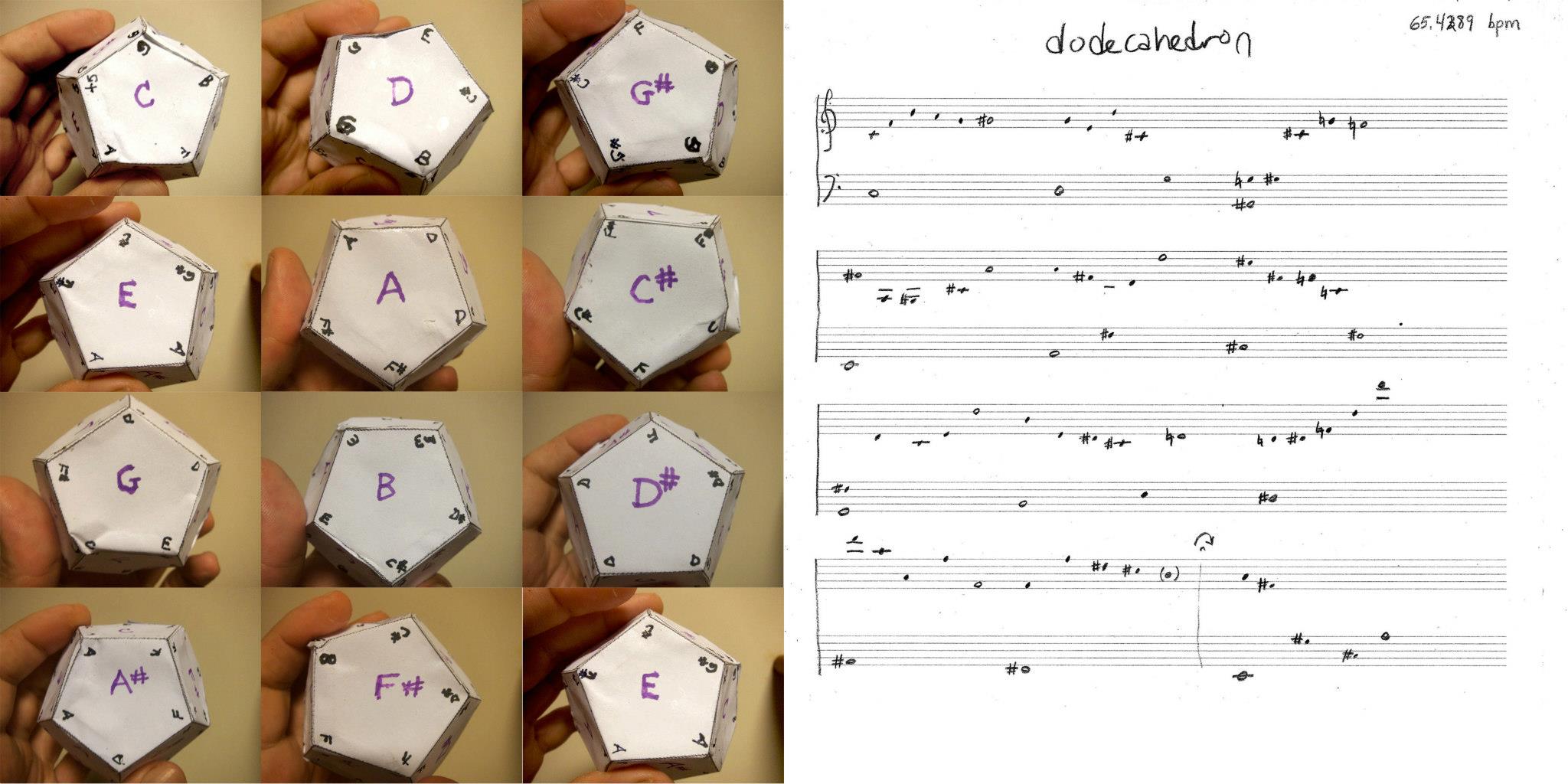
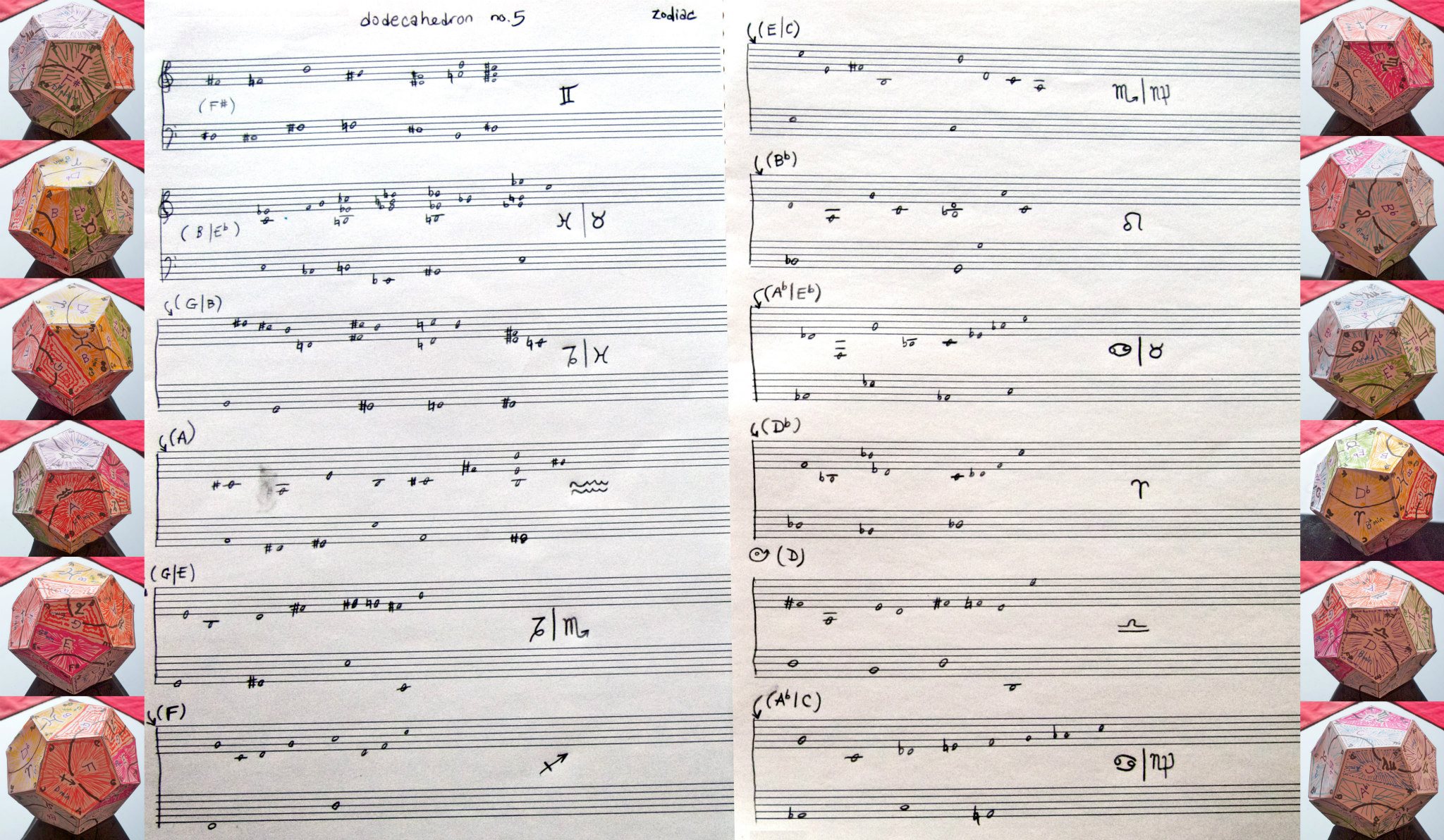
Selected scores and traversal studies:
Listen
Watch
Dodecahedron No. 5 — Zodiac