Mali
Dust was everywhere—in Bamako studios, on desert roads, and in the air at night—settling into instruments, clothing, and time itself.
Salif Keita — Papa (1998)
Salif's voice felt rooted in lineage, language, and lived experience rather than in style or convention.
My first extended engagement with Malian music came through my work with Salif Keita, often referred to as the "Golden Voice of Africa." I became involved during the recording of Papa (1998), a project produced by Vernon Reid. This collaboration quickly expanded beyond the studio.
For a period of time, I worked closely with Salif, rehearsing, arranging, and performing in an intense, immersive context. Playing with Salif meant responding to an exceptionally powerful vocal presence. The music demanded sensitivity, restraint, and a deep commitment to groove and support.
In 1998, I toured internationally with Salif as part of Africa Fete '98 and was appointed musical director for the tour. The experience was formative, both musically and practically. Leading an ensemble in this context revealed the complexity of band chemistry, cultural expectation, and collective authority. While the tour itself was relatively brief, it left a lasting impression on how I understand leadership, responsibility, and the limits of intention without full alignment.
This period marked my first sustained exposure to West African musical structures from the inside—not as study, but as lived practice—shaping my later listening, collaboration, and sense of musical humility.
Toumani Diabate & Roswell Rudd — Malicool (2001)
Through my ongoing work with Roswell Rudd and producer Verna Gillis, I was invited to participate in the recording of Malicool (2001), a collaboration between Roswell and the great kora player Toumani Diabate. The project involved extended time in Bamako, recording on location with Malian musicians.
We spent more than a month living and working in Bamako, immersed in a daily rhythm that contrasted sharply with the pace of New York. Dust storms would periodically sweep through the city, reshaping the physical and sonic environment. The experience made time feel layered and elastic, and emphasized the deep historical continuity embedded in Malian musical life.
Working alongside Toumani offered a close view into a musical practice grounded in lineage, virtuosity, and generosity. The collaboration was not about fusion or synthesis, but about coexistence—allowing distinct musical languages to meet without forcing resolution. This sensibility aligned strongly with my own emerging interest in systems that support interaction without collapse.
Malicool stands as a document of cross-generational and cross-cultural dialogue, and the time spent in Bamako remains one of the most formative experiences of my musical life.
Festival in the Sahara Desert — Essakane (2004)
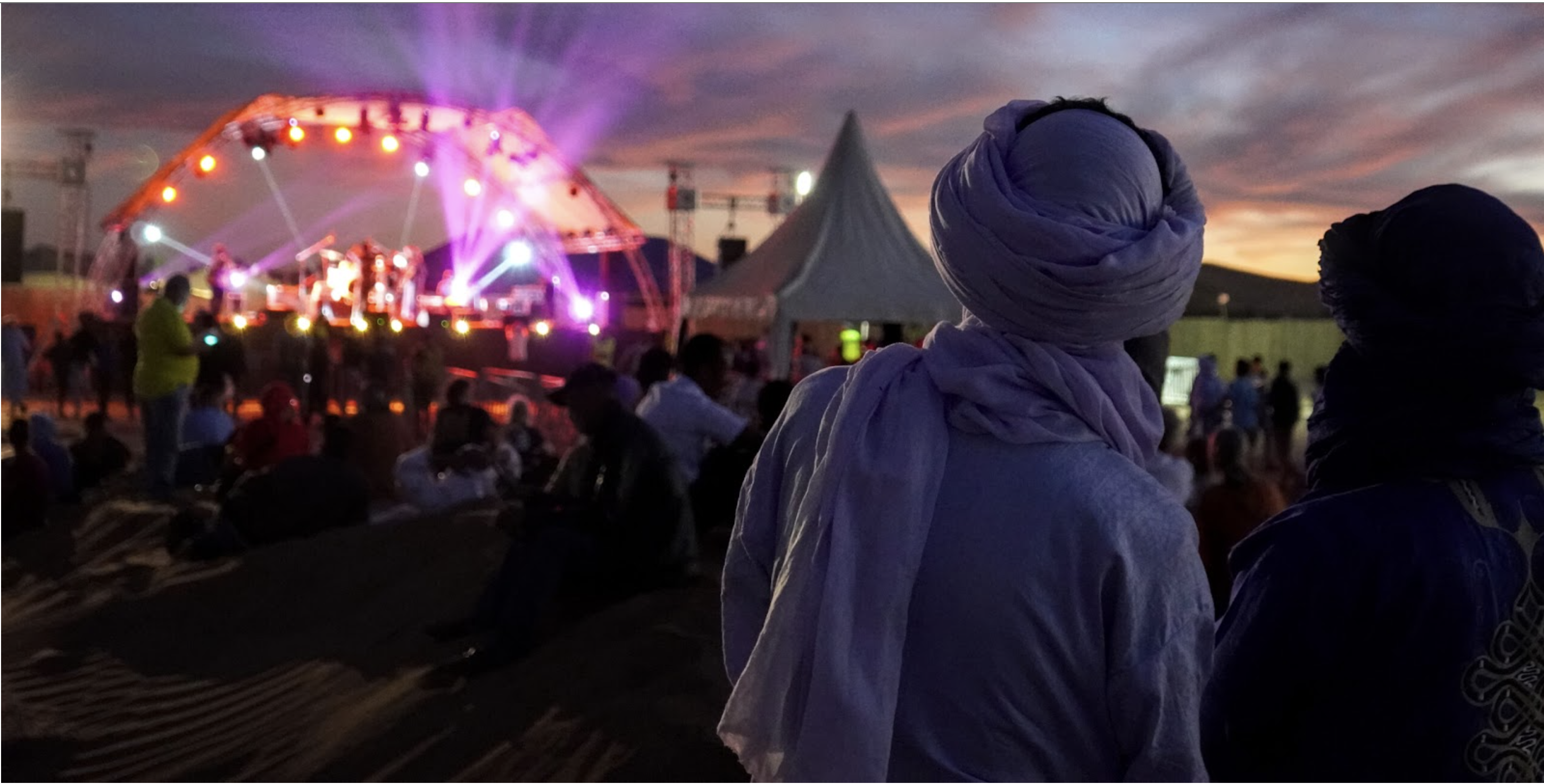
In January 2004, I traveled to northern Mali to perform at the Festival in the Desert, held near the village of Essakane, deep in the Sahara. I was there performing with Roswell Rudd, as part of his Trombone Shout Band.
Reaching the site required a three-hour journey north from Timbuktu by 4x4, across open desert. The setting was stark and expansive, and the scale of the undertaking was immediately apparent. Staging a multi-day festival in such a remote location—power, sound, lighting, food, transport—felt almost improbable. Much of it was carried out through local coordination and volunteer effort, a level of collective commitment that left a lasting impression.
The festival brought together Tuareg hosts and musicians with artists from across West Africa and beyond. Performers included Ali Farka Toure, Oumou Sangare, Manu Chao, Cheick Tidiane Seck, Amadou et Mariam, the Gangbe Brass Band, and Blackfire. Alongside these were deeply moving performances by Tuareg and Songhay musicians, Wodaabe singers from Niger, and the Bamako-based group Baba Djire.
What stayed with me most was not just the music, but the way it was situated—performed outdoors, at night, under open sky, with no separation between artists and audience beyond what the desert itself imposed. It was a reminder that music can function as gathering, exchange, and presence, even under the most demanding conditions.
— Hank